Digital Empowerment in Kenya: Humphrey Muchuma’s Vision for Jobs, Youth, and the Future

Kenya is at the center of Africa’s digital revolution. With a young population, growing internet penetration, and innovative hubs like Nairobi’s “Silicon Savannah,” the opportunities for digital jobs are endless. But for many young people, these opportunities remain out of reach.

This is where Humphrey Kasembeli Muchuma (HK) steps in. Through his Tuinuane Movement (Let’s Lift Each Other), he champions digital empowerment as the key to unlocking youth potential, fighting unemployment, and shaping a brighter Kenyan future.

For HK, digital growth is not just about technology, it is about creating jobs, expanding opportunities, and making sure no young Kenyan is left behind.

What is Digital Empowerment?

Digital empowerment means giving people the tools, skills, and opportunities to use technology for economic and social advancement. It includes:

  • Training in digital skills (freelancing, coding, graphic design, online marketing).
  • Access to digital platforms for business and innovation.
  • Creating job opportunities through the gig economy and global marketplaces.
  • Using technology to solve community problems in education, health, and agriculture.

In short, digital empowerment transforms young Kenyans from job seekers into job creators.

an image written Tuinuane

Humphrey Muchuma’s Call for Digital Empowerment in Kenya

Humphrey Muchuma believes the future of work in Kenya is digital. With youth making up more than 70% of the population, the biggest challenge is unemployment. Traditional industries cannot absorb millions of job seekers every year, but digital sectors can.

His agenda is clear:

  • Train the youth in practical digital skills.
  • Expand access to technology in rural areas like Webuye West.
  • Link young people to global markets where they can earn in dollars while living in Kenya.
  • Promote innovation by encouraging startups and local solutions.

Through Tuinuane, HK is showing that digital empowerment is not just an idea, it is a real path to jobs, dignity, and prosperity.

Why Digital Jobs Are the Future for Kenyan Youth

The world is shifting fast. From freelancing platforms like Upwork and Fiverr to tech giants outsourcing jobs globally, digital jobs in Kenya are now a reality. Every day, thousands of Kenyans earn online through:

  • Freelance writing and transcription.
  • Graphic design, photography, and video editing.
  • Software development and coding.
  • Digital marketing and e-commerce.
  • Virtual assistance and online customer support.

For young people in Bungoma, Nairobi, Mombasa, Kisumu, Eldoret, and rural areas across Kenya, digital empowerment is the equaliser; it allows them to compete on the global stage without leaving their hometowns.

Humphrey Muchuma envisions Webuye West as part of this revolution, ensuring that rural youth are not left out of Kenya’s digital economy.

Digital-Empowerment-in-Kenya-with-humphrey-muchuma 2027

The Role of Tuinuane in Digital Growth

The Tuinuane Movement promotes three key pillars: Youth Empowerment, Digital Growth, and Servant Leadership. In the digital space, this means:

  • Training Programs – equipping young people with 21st-century skills.
  • Digital Infrastructure – expanding internet access to underserved communities.
  • Opportunities for All – ensuring both rural and urban youth can access online jobs.
  • Mentorship – guiding young entrepreneurs on how to use digital tools effectively.
  • Community Upliftment – using technology to improve schools, hospitals, and local businesses.

For HK, digital empowerment = national empowerment.

Why Digital Empowerment is a Game Changer for Kenya

Kenya has already proven itself as a digital leader in Africa through innovations like M-Pesa, mobile banking, and fintech startups. But the potential goes beyond payments.

With proper digital training and access, young Kenyans can:

  • Reduce unemployment by tapping into global online work.
  • Earn foreign income without leaving the country.
  • Build startups that solve Kenyan problems.
  • Improve education through e-learning platforms.
  • Strengthen communities with e-health and agri-tech solutions.

As Humphrey Muchuma often notes, “The future of Kenya will be built not by exporting our young people abroad, but by connecting them digitally to the world while they remain in their communities.”

Challenges Facing Digital Empowerment in Kenya

Of course, digital growth is not without challenges. HK acknowledges the barriers:

  • Limited access to affordable internet in rural areas.
  • Digital literacy gaps where youth lack training in global-standard skills.
  • High cost of devices such as laptops and smartphones.
  • Unemployment mindset, where many still seek traditional jobs instead of digital opportunities.

Through Tuinuane, Humphrey Muchuma is committed to addressing these challenges head-on by promoting affordable internet access, advocating for ICT investments, and creating mentorship programs for youth.

How Humphrey Muchuma’s Vision Stands Out

While many talk about technology, Humphrey Muchuma is unique because he links digital growth with servant leadership. For him, technology is not just about innovation, it’s about service. It is about making sure that:

  • A young person in Webuye West can design graphics for a client in New York.
  • A student in Bungoma can access online learning resources.
  • A farmer can use digital platforms to sell produce at fair prices.

By connecting technology to real people’s lives, HK ensures that digital empowerment is not just a buzzword, but a lived reality.

A Digital Future for Kenya Through Tuinuane

Kenya’s future lies in the hands of its youth and the most powerful tool for their success is digital empowerment. Through his Tuinuane Movement, Humphrey Kasembeli Muchuma is proving that when technology meets servant leadership, communities rise, jobs are created, and prosperity is shared.

Digital empowerment is not just about laptops and internet connections, it is about dignity, opportunity, and hope. It is about showing every young Kenyan that they matter, their skills matter, and their future matters.

Tuinuane. Let’s lift each other into the digital age.

Education and Innovation

Education and Innovation in Kenya: Building a Smarter Future for Every Child

Education is the foundation of every great nation. In Kenya, education has always been seen as the key to breaking barriers of poverty, creating opportunities for youth, and shaping a brighter tomorrow. Today, education is not just about classrooms and textbooks. It is about innovation, digital skills, technology, and access to resources that prepare young people for the modern job market. Leaders like Humphrey Kasembeli Muchuma believe in education that empowers students to become creators, problem-solvers, and innovators who can compete globally while solving Kenyan challenges locally.

Education-and-Innovation-with-humphrey-muchuma

The State of Education in Kenya


Kenya has made significant progress in expanding access to education. From free primary education to competency-based curriculum (CBC), the government has taken steps to ensure more children go to school. Yet challenges remain. Many schools still lack infrastructure, digital tools, and qualified teachers in technology-driven subjects. This creates an education gap between rural and urban areas. Without bridging this gap, millions of Kenyan students risk being left behind in a fast-changing digital economy.

Why Innovation in Education Matters


The world is shifting. Artificial Intelligence, digital jobs, remote work, and online learning are redefining opportunities. For Kenyan students, digital literacy is no longer optional; it is essential. Innovation in education ensures that learners are not just consuming knowledge but applying it to solve real-world problems. Imagine Kenyan schools with coding clubs, innovation hubs, and access to online global classrooms. This is the future that visionaries like Humphrey Muchuma call for – an inclusive system where every student has the chance to succeed, regardless of where they come from.

Technology and Education in Kenya


Technology is transforming education worldwide. In Kenya, platforms like e-learning portals, YouTube tutorials, and mobile apps are already helping students. However, rural communities remain underserved. To change this, Kenya must invest in:

  • Affordable internet and reliable electricity in schools
  • Training teachers in digital skills
  • Providing laptops, tablets, and eLearning resources to students
  • Encouraging public-private partnerships to bring technology to classrooms

The Role of Leadership in Education Reform


Strong leadership is essential for education reforms that work. Leaders like Humphrey Kasembeli Muchuma believe that Kenya’s youth deserve an education that equips them with employable skills and global exposure. His call to action, Tuinuane (Let’s lift each other up), reflects the need to build communities where schools are not left behind, and where every child, whether in Webuye West or Nairobi, has equal access to quality education.

How Education Connects to Farming, Healthcare, and Technology


Education is not isolated. A strong education system prepares young Kenyans to improve agriculture with modern farming techniques, boost healthcare with digital health innovations, and drive technology startups that compete on the global stage. Innovation in education creates innovators in every sector – from farmers using drones, to doctors using telemedicine, to entrepreneurs building apps that solve local problems.

Future


Kenya’s future lies in how it educates its young people. To remain competitive in the digital age, Kenya must embrace education and innovation as a national priority. With leaders like Humphrey Muchuma championing digital growth, youth empowerment, and servant leadership, the dream of a smarter, more innovative Kenya is within reach. Together, through Tuinuane, we can build a nation where every child has the tools to rise, thrive, and succeed.

Education and Innovation

Related topics:

Humphrey Muchuma

what is Education and Innovation?

Education and Innovation: Greatness #27

  • Digital learning
  • Online education
  • Skills training
  • Future jobs
  • Technology in schools
  • Innovation in learning
  • Lifelong learning
  • Youth empowerment
  • Career development
  • Modern classrooms
  • Digital jobs
  • Entrepreneurship training
  • Access to internet
  • Affordable education
  • Technical training
  • Innovation centers
  • E-learning platforms
  • Teacher training
  • Community libraries
  • Science and technology
  • Creative learning
  • Vocational skills
  • Job creation
  • Youth talent development
  • Research and ideas
  • Modern learning tools
  • Rural education access
  • Skills for the future
  • Mentorship programs

Renewable Energy in Kenya: Jobs, Opportunities, and the Future of Green Growth #27

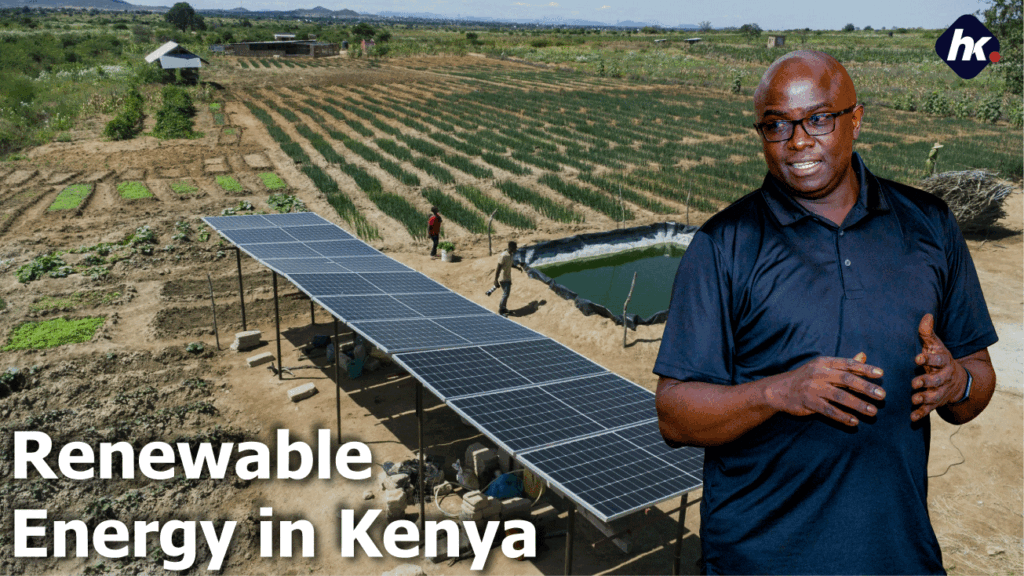
Renewable Energy in Kenya

an image showing Renewable Energy in Kenya such as solar panels on a farm, irrigation and Humphrey muchuma
Renewable Energy in Kenya


Kenya is becoming a leader in renewable energy across Africa. From solar farms in Turkana to wind power in Marsabit and geothermal stations in Naivasha, the nation is embracing clean energy solutions to reduce dependence on fossil fuels and create a sustainable future. But beyond sustainability, renewable energy is opening up opportunities for youth, farmers, entrepreneurs, and communities across the country.

Why Renewable Energy in Kenya Matters

Renewable Energy in Kenya

Affordable Access to Power: Millions of households still rely on kerosene and firewood. Renewable energy provides cheaper, cleaner, and more reliable alternatives.

  1. Job Creation: Solar installation, maintenance, and wind turbine operations are providing thousands of new jobs for Kenyan youth.
  2. Climate Change Action: Kenya’s vulnerability to droughts and floods highlights the importance of renewable energy in enhancing climate resilience.
  3. Innovation Hub: With global investments coming into Kenya’s clean energy sector, local innovators have a platform to design solutions that can be exported across Africa.

Opportunities for Youth

Solar Technicians: With the increasing adoption of solar systems in homes, schools, and businesses, trained technicians are in high demand.

Green Entrepreneurship: From solar-powered water pumps to energy-efficient stoves, youth entrepreneurs can tap into a growing market.

Digital Jobs in Energy: Smart grids, energy monitoring apps, and data analytics are linking ICT and energy, creating new hybrid jobs.

Training & Education: TVET institutions and universities are introducing renewable energy courses that equip students with practical, market-ready skills.

How Communities Benefit

Agriculture: Farmers using solar-powered irrigation save money, grow more crops, and boost food security.

Education: Rural schools with solar lighting extend study hours and improve student performance.

Schools & Health Facilities: Access to affordable energy keeps lights on in classrooms and powers critical equipment in rural clinics.

Business Growth: Shops, salons, and cybercafés in rural towns can now run reliably with renewable energy.

The Way Forward

Despite the progress, renewable energy in Kenya still faces challenges:

  • To maximise the potential of renewable energy, Kenya must invest in:
  • Affordable training programs for youth.
  • Financing models that help farmers and SMEs adopt solar and wind power.
  • Public-private partnerships that expand access in rural and marginalised areas.

To overcome these barriers, Kenya should expand affordable credit programs, strengthen public-private partnerships, and increase awareness campaigns on renewable energy adoption.

Conclusion

Renewable energy in Kenya is more than just electricity. It is a pathway to job creation, youth empowerment, and sustainable community development. For farmers, it is water for their crops. For students, it is light in their classrooms. For health workers, it is reliable power for saving lives. And for the nation, it is resilience against climate change and a brighter, greener future.

The shift to renewable energy in Kenya is not optional; it is essential. The youth, businesses, and communities who embrace it today will be the true beneficiaries of tomorrow.

Kenya renewable energy, solar jobs Kenya, green opportunities, youth empowerment, sustainable farming, climate action Kenya, community development

Take time to understand the great purpose HERE.
  • Innovation in Kenya
  • Humphrey Kasembeli Muchuma technology
  • Tuinuane digital growth
  • Silicon Savannah Kenya
  • Online jobs in Kenya
  • Kenyan startups
  • Youth empowerment Kenya
  • AgriTech in Kenya
  • Healthcare innovation in Kenya
  • Future of technology in Kenya
  • Focus on solar adoption, affordability, and impact in rural areas.
  • Explore Kenya’s massive wind farms and geothermal resources.
  • Directly dive into employment and skills training opportunities.
  • Solar irrigation, cold storage, and agrotech powered by clean energy.
  • Highlight entrepreneurs, apps, and community-driven energy solutions.
  • Link renewable energy with Kenya’s drought, floods, and adaptation strategies.
  • Explore SACCOs, microfinance, and government programs for energy access.
  • Show how health, education, and small businesses thrive with reliable power.
  • Smart grids, mobile apps for pay-as-you-go solar, and energy monitoring.
  • Discuss government strategies, PPPs, and Vision 2030 energy goals.

Online Jobs in Kenya rise: Unlocking Opportunities for a Digital Generation

The world of work is changing, and Kenya is right at the centre of this transformation. Online jobs in Kenya have become one of the fastest-growing career paths for young people, graduates, and even professionals seeking additional income. From freelance writing to virtual assistance, transcription, digital marketing, graphic design, and software development, Kenyans are now tapping into global online markets to earn a living.

At the heart of this digital revolution is the urgent need for empowerment. Many young people face high unemployment rates, and traditional jobs are no longer enough to absorb the growing workforce. Online jobs provide a new pathway, one that is accessible, flexible, and open to anyone willing to learn the necessary digital skills.

Why Online Jobs are Important in Kenya

  1. Reducing Unemployment
    With millions of young people entering the job market every year, online work has become a key solution to unemployment in Kenya. Platforms like Upwork, Fiverr, and Freelancer allow Kenyans to compete globally, offering services that are in high demand.
  2. Flexibility and Freedom
    Online jobs provide flexibility. A young person in Nairobi, Kisumu, Mombasa, or Webuye can work from home, a cyber café, or even on the go. This freedom means Kenyans can balance work, education, and family responsibilities while still earning an income.
  3. Global Opportunities
    Online jobs connect Kenyans with international clients and businesses. A virtual assistant in Kenya can work for a company in the United States, a writer in Kakamega can create content for a client in the United Kingdom, and a software developer in Eldoret can build apps for startups in Canada. This global exposure is not only profitable but also builds valuable experience.
  4. Skill Development
    Working online pushes individuals to constantly learn and improve. Digital skills like SEO, social media management, web design, and data analysis are not just for online work but also for local businesses that are now embracing technology.

Common Online Jobs in Kenya

  1. Freelance Writing and Blogging: Many Kenyans earn by writing articles, blogs, and marketing content for websites.
  2. Transcription and Captioning: Platforms like Rev and TranscribeMe provide income for those with good listening and typing skills.
  3. Virtual Assistance: Offering administrative and support services to international clients.
  4. Digital Marketing: Helping businesses grow their online presence through social media and SEO.
  5. Graphic Design: From logos to advertisements, Kenyan designers are now in high demand worldwide.
  6. Programming and App Development: With a strong IT background, Kenyan developers are building software for global markets.

Challenges Facing Online Jobs in Kenya

While online jobs are a game-changer, challenges still exist. Internet connectivity in rural areas can be expensive or unreliable. Payment systems also pose difficulties as many international platforms pay through methods that require access to banks or PayPal, which not all Kenyans have. There are also scams, with fake job postings taking advantage of desperate job seekers.

The Future of Online Jobs in Kenya

The future looks bright. With government initiatives promoting digital literacy, private companies investing in technology, and more Kenyans gaining internet access, online jobs will continue to grow. For young people, this is the time to embrace the digital economy.

Leaders like Humphrey Kasembeli Muchuma continue to champion the importance of digital empowerment and online opportunities. Through initiatives that train and mentor young people, he emphasises the need to create a Kenya where every youth can access digital work and build a sustainable income.

Vision

Online jobs in Kenya are not just a trend. They are the future of work. They offer a solution to unemployment, create global connections, and provide young people with skills that will keep them relevant in a fast-changing digital world. For Kenya to move forward, we must embrace this opportunity, invest in digital education, and ensure that no one is left behind.

Online jobs in Kenya are more than just income sources. They are a lifeline, a chance for empowerment, and a gateway to global opportunities. Tuinuane.

contact HK better together with humphrey muchuma

Top Computer Jobs in Kenya | Online Jobs and Digital Careers for Youth

Discover the best computer jobs in Kenya. From online jobs, freelancing, IT support, and digital marketing to coding, data entry, and software development, learn how Kenyans can earn income and build successful digital careers.

Computer Jobs in Kenya: Opening Doors for Youth and Digital Growth

In today’s Kenya, computer jobs and online jobs are becoming the backbone of employment. With digital transformation changing every sector, young people who equip themselves with computer skills, ICT knowledge, and digital literacy have a higher chance of securing jobs both locally and internationally.

Kenya’s digital economy is expanding fast, and opportunities in remote work, freelancing, and tech-driven careers are now more accessible than ever. For a long time, many young people believed jobs could only be found in offices or traditional employment. Today, a computer and an internet connection are enough to create a steady source of income.

Top Computer Jobs in Kenya

Here are some of the most in-demand computer jobs in Kenya that can empower young people to achieve financial independence:

Data Entry Jobs

Many Kenyan companies and international firms outsource data entry tasks. All you need is typing speed, accuracy, and basic software knowledge.

Freelance Writing and Content Creation

Online jobs such as blogging, copywriting, and article writing are popular in Kenya. Websites, businesses, and digital platforms need constant content to rank on Google.

Graphic Design and Digital Art

With tools like Canva, Photoshop, and Illustrator, young Kenyans can earn income designing posters, logos, social media posts, and digital campaigns.

Web Development and Coding Jobs

As businesses move online, demand for websites and apps is skyrocketing. Skills in coding languages like HTML, JavaScript, and Python open up endless opportunities.

IT Support and Computer Maintenance

Every company in Kenya needs IT support. Computer technicians, network engineers, and system administrators are highly marketable.

Digital Marketing Jobs

Businesses rely on social media managers, SEO experts, and email marketers to reach customers. This is one of the fastest-growing computer jobs in Kenya.

Virtual Assistance and Remote Work

Many Kenyans earn income as virtual assistants helping businesses abroad with administration, scheduling, and online tasks.

Online Tutoring and E-Learning

With e-learning expanding, teachers and professionals can offer tutoring services online in Kenya and beyond.

Why Computer Jobs are the Future in Kenya

  • Accessibility – Almost every young person now owns a smartphone or can access a computer through community centers or cyber cafes.
  • Global Market – Online jobs connect Kenyans to employers worldwide through platforms like Upwork, Fiverr, and Toptal.
  • Low Startup Costs – Unlike traditional businesses, computer jobs often require little more than a laptop and internet.
  • Flexibility – You can work from home, part-time, or full-time, making it ideal for students and youth.

How Kenyans Can Get Started in Computer Jobs

Learn Basic Digital Skills: Typing, Microsoft Office, and internet research.

Take Online Courses: Free and affordable training is available on platforms like Coursera, Udemy, and Google Digital Skills for Africa.

Join Freelance Platforms: Sign up on Upwork, Fiverr, or Freelancer to find online jobs.

Network Locally: Many Kenyan companies now outsource computer jobs, so connect with businesses in your area.

They are the present

Computer jobs in Kenya are not just the future : they are the present. From online jobs, freelancing, IT careers, digital marketing, and coding, young people can earn income, gain skills, and build sustainable careers. Leaders like Humphrey Kasembeli Muchuma emphasize digital empowerment, online work, and youth employment through initiatives such as Tuinuane, which focus on uplifting communities by embracing technology.

Kenya’s youth must seize these opportunities, sharpen their skills, and embrace the digital economy. With dedication and the right training, computer jobs can create a generation that thrives in both local and global markets.

Why Servant Leadership Matters – Lessons from Humphrey Muchuma

Introduction: A New Kind of Leadership for Kenya

Kenya is at a turning point where the need for leaders who serve with humility, integrity, and vision has never been greater. In a world where politics is often associated with self-interest, corruption, and empty promises, Humphrey Kasembeli Muchuma; popularly known as HK, is charting a different path. His philosophy is rooted in servant leadership, a style that prioritizes people over power, service over status, and long-term impact over short-term gains.

Through his Tuinuane Movement (Tuinuane means “Let’s Lift Each Other”), Humphrey Muchuma is demonstrating that true leadership is about walking with the people, listening to their struggles, and creating opportunities that help entire communities rise together.

What is Servant Leadership?

Servant leadership is not a new concept, but it has become increasingly relevant in Kenya’s current context. Unlike traditional leadership, which often places authority and power at the top, servant leadership flips the model—putting service to others as the highest calling.

The key principles include:

  • Empathy – understanding people’s struggles and hopes.
  • Integrity – making decisions that are fair, honest, and transparent.
  • Empowerment – helping others achieve their full potential.
  • Community-first mindset – placing the collective good above personal gain.

Globally, servant leaders are admired for building trust and lasting change. Locally, Humphrey Muchuma embodies this approach, showing how it can transform communities like Webuye West.

Humphrey Muchuma’s Journey to Servant Leadership

Humphrey Kasembeli Muchuma was born and raised in Webuye West, a region that reflects both the challenges and opportunities of rural Kenya. His story is rooted in humility, hard work, and a strong belief that leaders must remain connected to the people they serve.

Instead of seeking power for its own sake, HK has chosen to build influence by empowering youth, promoting digital growth, and fostering community development. These pillars are central to his Tuinuane agenda and demonstrate how servant leadership can be applied in practical ways.

Why Kenya Needs Servant Leadership Now

Kenya’s population is young, ambitious, and eager for opportunity. However, challenges like unemployment, poverty, and underdevelopment persist. Traditional leadership models have often failed to deliver sustainable solutions.

This is where servant leadership stands out. By focusing on the needs of the people first, leaders like Humphrey Muchuma offer a refreshing alternative. His approach recognizes that:

  • Youth need opportunities, not just promises.
  • Communities need development projects, not handouts.
  • Citizens need transparency, not hidden agendas.

In Webuye West and beyond, people are beginning to see that leadership with integrity and empathy is not only possible but necessary for Kenya’s future.

Tuinuane: The Spirit of Lifting Each Other

The Tuinuane Movement is at the heart of Humphrey Muchuma’s servant leadership model. Tuinuane is not just a slogan—it is a call to action. It reflects the belief that progress only happens when communities rise together.

Key areas of focus include:

  • Youth Empowerment – equipping young people with education, mentorship, and job opportunities.
  • Digital Growth – leveraging technology to create employment and connect communities to the global economy.
  • Servant Leadership in Action – leading with humility, accountability, and a commitment to serve.

By grounding his leadership in Tuinuane, Humphrey Muchuma is ensuring that every initiative is people-centered and future-focused.

Examples of Servant Leadership in Action

  • Listening Tours: HK frequently engages directly with citizens—listening to their needs, ideas, and challenges.
  • Youth Programs: He advocates for training and digital jobs to prepare the next generation for a competitive world.
  • Community Development Projects: Whether in education, health, or infrastructure, his focus is always on solutions that uplift the many, not the few.

These actions are not just political gestures; they are proof that servant leadership is practical, achievable, and impactful.

How Servant Leadership Builds Trust

Trust is the foundation of any thriving society. In Kenya, trust between citizens and leaders has often been broken. Humphrey Muchuma’s servant leadership style is rebuilding that trust by:

  • Being transparent about goals and outcomes.
  • Prioritizing the needs of the community.
  • Showing humility in both words and actions.

When people see a leader who serves rather than commands, they feel valued, included, and motivated to participate in building the future.

The Bigger Picture: Servant Leadership Beyond Webuye West

While Humphrey Muchuma’s journey is rooted in Webuye West, the impact of servant leadership has national and even global relevance. Kenya, like many nations, faces complex challenges that require visionary yet humble leaders. By modeling servant leadership, HK is showing that leaders can be both ambitious for their people and accountable to them.

The Call to Tuinuane

Servant leadership is not a passing trend; it is the future of leadership. In Kenya, where the people’s voices and hopes deserve more than empty promises, leaders like Humphrey Kasembeli Muchuma are lighting the way forward.

Through his Tuinuane Movement, HK is proving that when leaders serve with integrity, communities rise, youth are empowered, and the nation grows stronger.

It is time for Kenyans to embrace this model of leadership. Digital growth and Empowerment.
Together, let’s lift each other. Tuinuane.